Sunday, 19 January 2014

Game of 2013 - Resogun

I chose Resogun, Housemarque's beautiful shooter (and PlayStation 4 launch title), as my game of 2013 for a D+PAD Magazine article. Hailed by The Observer as "an old-fashioned arcade shooter that reinvents Armageddon as a frantic cascade of beautiful particle effects", it's still the best game on Sony's latest console (and at time of writing, still free to PlayStation Plus members!).


A tribute to classic 1980’s side-scrolling shooter Defender, built on the sort of twin-stick mechanics that felt revelatory back in 2005 with Geometry Wars: Retro Evolved (which also, appropriately, was also it’s host console’s best launch title) Resogun is a game of familiar foundations dragged into contemporary relevance with a mastery of next-gen technology and game design of quite deft balance.

With Resogun, Housemarque have approached the twin-stick shooter with a sensibility closer to that of a ‘sandbox’ developer than one whose sole remit is “shoot everything”. Humans, multipliers, bonuses and high scores are four of the key strands open to the player; it’s mastering which approach to take and when that drives you further into the game, as the game’s striking initial aesthetic appeal gives way to a deeper than anticipated structure. Maintaining the multiplier drives your score up at a faster rate, but if saving every last human is your aim then your focus needs to shift quickly to locating the ‘keepers’, special enemies who release one human per successive wave cleared. Each saved human bestows a bonus, such as points or, more crucially, an extra life or bomb. It’s in balancing the two factors that the real high scores start to emerge, while this is without taking into account the five-stage arc replete with end-of-level bosses.


How you choose to play Resogun is up to you, but it’s the manner in which it supports each of these tactics, whilst never being anything less than a brutally addictive, enjoyably intense experience, that is the game’s brilliance. Developers Housemarque established their reputation with the magnificent twin-stick double of Super Stardust Delta and Dead Nation, but it’s Resogun that is their masterpiece.


Tuesday, 15 January 2013

Hundreds

Developer: Semi Secret
Format: iOS

Score: 8.0


Semi Secret’s auto-runner classic Canabalt was the first game I played on my iPhone, and although it’s intelligent execution proved to be a false dawn for my own future experiences with iOS games – it turned out that very few were as addictive and pure in such a joyously un-cynical fashion - it‘s innate understanding of touch control gaming has fed into their latest iOS release, Hundreds.

Canabalt married perpetual movement with one simple action: jump. Every touch of your device’s screen would send the running man into the air, the length and power of his jump determined by the amount of time spent holding your finger down, with the aim of the game being how far you could make the unnamed runner survive leaping over obstacles and between skyscrapers. It was twitch gaming in the most direct sense, with all other considerations apart from that one control mechanism taken out of the equation. On my iPhone’s screen it worked beautifully.


Hundreds is diametrically opposite in nearly every sense to Canabalt, though both titles have a fine grasp of physics. Whereas the earlier Canabalt was manic and reliant on reaction, Hundreds is cerebral and, at first, almost calming in its approach. Each round in Hundreds (yes, there are 100 of them) is cleared by using the circles on screen to grow the total number of points to, yep, 100. You do this by holding your finger down on one of the numbered circles until it, or a combination of several circles, reach the magic number. The numbered circles will often float within the white space of the screen; it’s very easy to spend time just watching them serenly bounce around.


Complications arise, in the manner of all the finest puzzle games, gradually. First you’re introduced to the fundamental rule: “If They Touch When Red Then You Are Dead”. When you hold down your finger on a numbered circle, it turns red as the numbers rise. Should the circle touch anything else on screen whilst red then the game is over. So far, so simple. But soon you’re confronted with the likes of saws (which reduce the count of any circle they come into contact with to zero), immovable circles and sets of two-circles connected by a line (these need two fingers to activate). The later puzzles will use a combination of such obstacles in an escalating challenge that is, given the game’s minimal looks, like an Aperture Science lab project created by The Designers Republic.

Refreshingly open-ended (a number of subsequent rounds will unlock in case you find yourself stuck on a particularly tough puzzle), self-enclosed (there are no microtransactions) and conceptually perfect, Hundreds is the first great game of 2013. 

Thursday, 3 January 2013

Forza Horizon


Developer: Playground Games / Turn 10 Studios
Format: Xbox 360

Score: 7.6


Horizon is a Forza game only in name. Here the series’ penchant for auto-fetishism and rigid progression has been replaced by a more open-ended structure, and a relatively relaxed approach to the art of driving closer in style to rebellious boy racers than the refined sophisticate of old. In taking this tack Horizon has also sacrificed the air of classicism that made Forza so appealing; granted, Turn 10’s superb handling model has been retained, but the shell around which this core game is wrapped sees developers Playground Games straining for an ‘alternative’ edge that falls cringingly short.

These problems are in nearly every facet of the game’s image. The silly narrative that follows your pursuit of the championship is full of caricatured opponents and pointless cutscenes (the only player motivation comes from the self-directed one of moving up the levels), while the generally awful soundtrack choices (including The Enemy, Lostprophets, Skrillex remixes) betray a paucity of inspiration and undermine everything that Horizon sets out to be. They aren’t crippling problems, but they come close to spoiling what is an otherwise engrossing culmination of recent console racing history.


It’s a shame that the overarching aesthetic, such an important part of the game, is so unconvincingly realised, as the gameplay systems within are cleverly intertwined, ensuring that you’re constantly engaged regardless of your current aim. The single-player sees you taking the mantle of a rookie challenger at the Horizon festival, in which a series of events are separated by tiered wristbands – the more races won, the higher your wristband level, which then opens up further events. Secondary to this is a persistent popularity ranking, with points awarded in and outside of races on various criteria – drifts, speed, overtaking etc. As you’re reminded at the game’s outset, “the crowds come to see spectacular racing”, so winning races in style is the key.

While credits are key to unlocking the higher wristbands, and can only be gained within events, the popularity ranking is an effective meta game that ensures it’s just as superficially rewarding to simply drive around the open world of Colarado, whether it be for the points-bonanza of an open stretch of highway, or because of the requisite OCD-friendly collectables which here take the form of discount signs (each one giving a 1% discount on upgrades) and speed cameras to discover. A lot of thought has gone into making the environment an integral part of the Horizon experience.


If all this sounds familiar, that’s because Forza Horizon is built on the foundations of several far more innovative racing games from recent years. It’s open network of roads is a nod to Burnout Paradise (one of the most forward-thinking games of this generation), although Criterion’s classic had a more interesting and diverse world to explore (granted Horizon’s adherence to the real world setting of Colardo may have been more restrictive). The interlocking emphasis on style is a nod to the much-missed Project Gotham Racing series, while the open world – in which fellow roaming drivers can be challenged – recalls the flawed Test Drive Unlimited games. Heck, even the choice of font, colour and attitude draws unfavourable comparisons with Codemasters’ DiRT. Many of Playground’s employees worked on some of the titles mentioned above, which doesn’t so much justify the wholesale incorporation of their ideas into Horizon but instead makes us regret that the same ingenuity on evidence in the earlier games couldn’t be brought into effect here.

This absence of innovation is compensated for however by a technical assurance that we expect will be matched only by Need For Speed: Most Wanted, Forza Horizon’s only significant racing challenger in these latter months of 2012. Colarado is beautifully realised, with the mountainous northern-regions in particular a visual delight. The frame rate is similarly exceptional.


When it comes to online play Forza Horizon thankfully doesn’t try to replicate the scope of the single player wholesale. Although there is a free roam mode, we found most of our time spent in some of the more intimate, streamlined game styles. The most fun of these are ostensibly the ones, as in Forza Motorsport 4, where the playground games of tag are transplanted to a racing arena – Infected, for example, tasks you with avoiding contact for as long as possible with fellow ‘infected’ racers, until you then have to chase the remaining survivors, while King is similar to Infected except the winner is the racer who can remain as King (i.e avoid being tagged whilst King) the longest.

Get beyond the cynical positioning of Forza Horizon and you’ll find a racer that is, ironically, as efficient and refined as it’s older, more mature, siblings. Whether it can build a community as effectively as the Motorsport games is unlikely, but Horizon, for all its familiarity and reluctance to experiment, is still a fine addition to the Xbox 360’s roster.


Previously published by D+PAD Magazine.

Sunday, 6 May 2012

Resident Evil: Operation Raccoon City

Developer: Slant Six
Format: PlayStation 3

Score: 3.6


I spent the majority of my Easter weekend playing a wonderfully conceived city-based zombie shooter, in which at least three separate design threads – twin-stick high-score chaser, single-player narrative, global metagame – all work in near-perfect harmony. Anyway, enough about Housemarque’s Dead Nation. This here is Resident Evil: Operation Raccoon City, Capcom’s latest attempt to sully its legendary series.

As an off-shoot of the main games, ORC sits alongside the likes of the Wii’s Chronicles series, by changing familiar Resident Evil game mechanics and putting fresh perspectives on classic scenarios/eras from the past. Operation Raccoon City takes place around the same time as the second and third games in the series, a period that has already been utilised by Capcom (most recently in the second Wii game, The Darkside Chronicles). In Operation Raccoon City the twist is that you play as the bad guys, taking control of one of six different members of the Umbrella Security Service trying to stop the T-Virus getting into the hands of the US military.


What this amounts to is a squad-based third-person shooter from Slant Six, the developers behind the SOCOM series. Once again Capcom’s practice of handing development duties to a Western outfit (see also Dark Void, Bionic Commando) has produced less than spectacular results. Quite why Capcom decided on external help is questionable, when Resident Evil 5 had already made such big strides towards a co-op focused campaign; perhaps ORC is something of a testing ground for the forthcoming sixth game in the main series, which is rumoured to follow a similar simultaneous multi-character set-up. If that’s the case then Resident Evil fans have every right to be concerned.


The problems with Operation Raccoon City begin on the surface; this is a game whose animation and level of visual detail never rises above perfunctory, and where a combination of an awkward camera and sloppy controls will often result in an untimely death. Whatever their faults, Capcom’s marquee games have always boasted glossy production values, but here the suspicion of cynical cash-in stems from the cheap aesthetics and continues throughout into the rest of the experience.

For a title in such a crowded genre as the third-person shooter, it helps if you get the basics right. While the shooting itself is passable, it’s undermined by imprecise melee combat and an unwieldy cover system that doesn’t always work when you want it to; it’s not even possible to move from one area of cover to another without having to stand up into the line of fire. We’re a long way from Vanquish.


The single-player quickly becomes tedious, especially when played solo. Played online it’s better, albeit still fundamentally let down by the wider issues such as bland level design and poor pacing. Although it may be an unfair comparison, Left 4 Dead was such a compulsive experience because it engendered a sense of dependency on your fellow team members, the panic rising to a crescendo as each mission reached it’s end. ORC has little of this vitality; online play is preferable because the AI of your computer-controlled squadmates leaves a lot to be desired, but as an experience it still falls far short of other, more visionary, games.


A glimmer of the game that ORC could have been lies in the multiplayer portion, and in particular Survivor mode. Here waves of zombies descend on the team, which you and your squadmates need to repel whilst waiting for a rescue helicopter to land. Ingeniously, there are only limited spaces on the chopper, which triggers a switch from co-operative combat to selfish scrambling as everyone races to get one of the precious seats for fear of being left behind. The open arenas of multiplayer - without the burden of a directed narrative - are somewhat liberating in comparison to the narrow, linear passages of play in the single-player.


It’s not enough to save Operation Raccoon City though, which ultimately is a title that feels too rushed to warrant any great investment on the part of the player. That it’s sold in such high numbers (at time of writing it’s number one in Japan) says a lot about the strength of the Resident Evil brand which, if ORC is anything to go by, is in danger of being fatally diluted.


Previously published by D+PAD Magazine.

Monday, 9 April 2012

Assassin's Creed 3 - Preview

In the new film from the Dardenne brothers, the wonderful The Kid With A Bike, a local drug dealer uses the lure of playing the new Assassin's Creed game to tempt the film’s titular kid back to his flat, in a bid to recruit him for a robbery. We'll take any excuse to mention French arthouse cinema.


Anyway, it was of course the extraordinary success of 2009’s Assassin’s Creed 2 that put Ubisoft’s franchise onto the lofty path it currently treads. Two sequels followed in successive years, giving the historical open-world adventure a status shared only by a handful of other games – that of the inevitable, annually updated Christmas-friendly moneyspinners. With such an escalation in exposure came the inevitable ‘criticisms’ that also regularly follow the likes of Call Of Duty and FIFA: that they’re casual games for casual gamers, the annual sequels leaving little time for innovation, diluting what was once a unique experience via the laws of diminishing returns.

Ubisoft have been nothing if not alive to such perceptions. Assassin’s Creed 3 is the first full sequel in the series for three years. It uses a new engine, is set in a new era, and stars a new hero (Connor). Everything else though, give or take some iterations, is business as usual. We’ll start with the era first.

Set in the years 1753-1783, this stretch of American history takes in the decade predating the start of the American revolutionary era and ends with the war between Great Britain and the United States concluding. It’s an ambitious framework for the game, and great attention has been taken to ensure historical accuracy. We’re shown a mission that takes place with the battle of Bunker Hill as its backdrop. The visual scale of the conflict, with columns of soldiers marching and firing in unison, is a high point for the series, whilst the famous order given to troops – “don’t fire until you see the whites of their eyes” – is heard as you walk among the troops, waiting for the mission proper to begin. The care for these little details – the verbatim speech, the slow pace of reloading – is in stark contrast to the traditional Assassin’s Creed gameplay, as Connor uses the armies’ confrontation to sneak around the field’s outskirts to kill a general on horseback.


The changes come thanks to the new engine, allowing Connor to climb trees and rockfaces with fluidity. In motion Assassin’s Creed 3 isn’t anything we haven’t seen before, but crucially it does look like a big enough step beyond the Ezio trilogy to seem, at the very least, like a series suitably refreshed. Other changes brought on by the update in technology include dynamic weather cycles, more natural NPC behaviour and the ability, via new animations, to clamber manfully through thick snow. In fact it’s these snow-based sections, which take place in the Frontier – a barren landscape of mountain ranges and roaming wildlife – that thrill the most. Looking isolated and not unlike a certain Rockstar-developed western, the Frontier territory gives ample opportunities for Ubisoft to demonstrate how this new game will differ.

Although development started over two years ago, the influence of Red Dead Redemption is felt in these brooding, convincingly isolated passages, not to mention the slaying of a bear followed by the option to skin the slain creature. That said, the athletic, fantastical manner in which Connor traverses the environment is far removed from that of John Marston, and it’s the surrounding milieu of Assassin’s Creed 3 – the passing regiments, the scattered villages – which should help differentiate Ubisoft’s excursion into wilderness territory. Apparently 30% of the game’s missions take place here, a sizeable chunk and a figure that the team will have to work with carefully if they’re to avoid the trap of repetition that afflicted previous games.

Unfortunately – albeit unsurprisingly – the narrative will once again be formed around the idea of an Animus meaning that the game world is, to all intents, a fabrication in the mind of contemporary protagonist Desmond Miles. A witty comment on videogaming construction it may be, but the story in Assassin’s Creed 2 was one of that game’s biggest failings, the tedious mythologizing and confusing plotting proving a barrier to the immersion that the best open-worlds offer. That said, this time around the Animus is more closely integrated into the game, which should help alleviate the disjunction between worlds that existed before.


Here are some other bullet points:
- So far three locations have been confirmed: the aforementioned Frontier lands, Boston and - still under wraps - a New York under siege.
- The name of the new engine is Anvil Next.
- Cut-scene technology has been vastly improved.
- Lead character Connor stands, apparently, for justice, and is half-British/half-Mojave.

Assassin’s Creed 3 isn’t the only major release this year to use American history as a foundation. BioShock Infinite, which releases just a few weeks before AC3, also hinges on a depiction of America, except its use is more of an allegorical one centred around the turn of the 20th century, and America’s growing status as a world superpower. Although the approach is markedly different, there’s something more exciting about Ken Levine’s thoughtful, nuanced vision.

The numbers, features and quotes we hear at this preview are impressive on paper, but leave us feeling generally unmoved. History, as the series' IP and development director Tommy Francois says, may be the developer’s “playground”, and the themes of the American Revolution may mirror those of Assassin’s Creed (liberty or death, power or oppression, control or freedom) but there appears to be a tension between the lengths to which historical accuracy has attempted to be followed, and the sci-fi narrative overlaid on top. It’s a trap that Assassin’s Creed 2, for all it's strengths, also fell into. This third chapter doesn’t as yet appear to share the same sense of revolution as its setting; we’ll have to wait until October to see if that will be enough.

Devil May Cry 4

Devil May Cry 4, with its introduction of a new character and an ending that hinted at further adventures to come, was likely meant to herald the beginning of a healthy new life for the series on next-generation consoles. Despite being a praiseworthy, albeit unadventurous, fourth chapter in Dante’s saga, it seems something didn’t quite go to plan as far as Capcom were concerned. That last line in this re-visited review – “from here, everything is looking very bright indeed” – sounds a tad optimistic now.

Over four years on from Devil May Cry 4’s release, and there still isn’t any hint of a ‘proper’ fifth chapter. Instead, last week saw the European release of the inevitable retro exercise Devil May Cry HD Collection whilst – far more controversially – development duties for a new full-blown DMC game have been handed to Ninja Theory, the developers of the underrated Heavenly Sword and, er, the overrated Enslaved. Set in a “parallel, non-canon” version of the DMC universe, and featuring the sort of self-consciously gritty restyling that tends to be shorthand for a developer unsure of which direction their creation can go next, early reports on DmC: Devil May Cry (because nothing shouts reboot like a minimal title) haven’t been encouraging. But there’s something fascinating about DmC, especially as it’s, by our account, the first big Japanese franchise to be entrusted to a Western studio. That’s one for the future (well, E3 2012).

For now, to celebrate the release of the aforementioned Devil May Cry HD Collection, here’s our 2008 review of DMC4. And to think, Bayonetta was still two years away…


The amount of criticism regularly directed at Devil May Cry 2 even today may seem disproportionate and in no uncertain terms a little picky, but the overwhelmingly negative light in which that 2003 release is still held suggests two things: 1) Devil May Cry is a series that demands an opinion, whether devotional or not, like few others; and 2) the second game remains an albatross hanging around the neck of the franchise, which even the fantastic previous instalment has failed to dislodge completely.

That’s why when in this latest instalment new character Gloria says to Dante “Looks like you’ve got a rep to live up to”, it’s almost as if the developers are not only acknowledging that there’s still some debt to pay, but that there are certain things the player expects from a Devil May Cry game; outrageously flashy action, lots of guns and a nonsensical narrative, to give but three examples. It almost goes without saying that Devil May Cry 4 delivers emphatically on these fronts, despite featuring some disheartening flaws.

New character Nero is central to proceedings in the tricky plot, a naive and eager foil to the brash, cocksure Dante. A convincing relationship of master and apprentice develops between these two as the game progresses, although to explain more would be to potentially spoil moments that are best appreciated when accompanied by the most OTT cut-scenes in the short history of Devil May Cry (and that’s quite an achievement in itself).


That this is the first established Capcom franchise to receive a next-gen makeover meant that the graphics and general presentation were invariably going to be a significant step ahead of what we’d seen before, and sure enough ‘Devil May Cry 4’ positively glistens. The lighting through- out is wonderful, the backgrounds expansive and dramatic (the entire forest sequence being a particular highlight), while in crucial areas such as character animation and bosses, the increased processing power has clearly played an integral role. We can only imagine the delights Resident Evil 5 will offer in twelve months time.

There isn’t anything radical underlining this extra flourish and polish, just Capcom aggressively pushing Devil May Cry 4 towards everything that the series has ever stood for; that fleeting impres- sion of a PlayStation 2 game wrapped in more expensive visuals is quickly replaced with the instant gratification of seeing Dante cut a wall into the shape of a heart using an endless shower of blades, or of watching Nero shatter the armour of flying knights whilst in balletic slow-motion. So far, so thrilling. The major problem though isn’t what Capcom has done with the leap to next-generation, but rather what they haven’t.

The charge often levelled at recent titles such as Call of Duty 4 and Heavenly Sword (to give a more relevant example) is that however enjoyable the games, the overall experiences have been extremely brief, lengthened in these cases by an impeccable online mode and a clever system of unlockable extras. Capcom has rather cynically (or deceptively, if we’re being charitable) attempted to swerve this issue by masking some significant repetition with the otherwise welcome introduction of Dante. It is no exaggeration to say that one-third of the game involves Dante traversing across almost exactly the same route that Nero takes, albeit in the opposite direction. Additionally, though the bosses are all suitably memorable creations, expect to encounter them more than once. Never mind the consistent beauty of the fighting system, such design feels unfairly cheap and draws attention to the potential ideas and environments that could have been explored across such a large portion of the game given more development time.


Just as well then that the mechanics of combat are so finely balanced, for this is truly some of the finest action gaming of recent years. Nero’s new Devil Bringer ability is the most important addition to the already bulging repertoire, allowing him to drag enemies closer as well as frequently swinging them into the path of others. It’s testament to how well the fighting system works though that once play switches to Dante you’re not left hankering for Nero, but are instead fondly recalling the suave carnage of the third game - Dante’s four fighting styles, changeable with the touch of the d-pad, each making a return. The combinational and tactical possibilities are numerous, and it’s this unprecedented depth and flexibility afforded to the player that raises Devil May Cry 4 beyond the more consistently surprising God Of War 2, or the more studious Ninja Gaiden.

The combat system is also the aspect of the game that goes furthest in (almost) justifying the aforementioned recurring mission structure. Devil May Cry has always placed a strong emphasis on style; completing the game for some players is almost a side concern when there are SSS rankings to achieve and air combos to master. The ends are less important than the means used to get there, and within this context Devil May Cry 4 makes perfect sense.

Although true redemption for this most singular of franchises is still tantalisingly out of reach, consider Devil May Cry 4 a devastatingly impressive placeholder, a flamboyant consolidation of everything you ever loved about the series. It’s impossible to ignore, a joy to watch and suggests that finally, after much internal anxiety, it’s time to stop looking back and instead embrace the future of Devil May Cry. And from here, everything is looking very bright indeed.

Friday, 23 March 2012

Ridge Racer Vita and altruism in gaming

What the PlayStation Vita version of Ridge Racer asks of the player is something that few videogames prioritise; it's a facet of human behaviour that any self-respecting entry in Namco’s racing series - a celebration of life’s pleasures - shouldn’t really be concerned with: altruism. Isn’t personal gratification (read: selfishness) a core tenant of gamers? That said, it’s not altruism as a concept that’s the problem when starting to pick apart the new Ridge Racer, but rather Namco’s fundamental misjudgement over player motivation. After all, many games encourage the player to behave in selfless ways, whether overtly or otherwise.

Useful contemporary examples (i.e. games I can think of from the top of my head) include I Am Alive, in which you can help the destitute citizens of Haventon by giving them useful items such as first aid kits that would otherwise have helped with your own adventure. Then there’s the forthcoming Planetside 2, a blend of MMO and FPS where your online battles will affect the wider, continuously-developing galactic war, as opposed to simply serving an individual, self-contained record of progression as in Call Of Duty.

Both I Am Alive and Planetside 2 soften these gameplay devices in ways that acknowledge the player; the former rewards your acts of generosity with additional retries, while Planetside 2 – according to previews – does still allow for the development of your own character through experience points in the midst of the large-scale conflict. Ridge Racer Vita, on the other hand, lacks anything approaching these sweeteners.


At the game’s outset you’re asked to select one of four teams to join. Your role then becomes that of an employee for this team, with Vision Points – earned through victory in races – being added to your team’s running total. The idea of these teams perpetually trading positions, each consisting of thousands of real-world participants from around the world is an attractive one, but its execution is broken.

With only three tracks in the basic game, Ridge Racer Vita quickly starts to feel familiar. This repetition poses a direct problem to the player’s motivation; it turns out that being given a task no greater than simply amassing as many points as possible for a faceless corporation by racing on the same tracks again and again (and again) just isn’t enough to maintain interest. Compared to the fantastic Ridge Racer 3D, which had an extensive structure of tournaments, the paucity of content here is embarrassing.

But it gets worse. Namco could argue that to alleviate the tedium there is still the chance of personal progression, as races give you credits, which in turn unlock upgrades for your car. But for a system of persistence to work, surely the gamer’s aims should be clear? Ridge Racer doesn’t show how many points away from the next level you are, while the system of upgrades is fixed and often forces you to spend hard-won credits on blocks that are empty, just to get closer to the next actual bonus.

So there are little in the way of personal rewards, while there’s no wider framework to keep the player engaged. Asking players to be altruistic and leave aside individual gratification for a wider cause (whether it be for the survivors in I Am Alive, an intergalactic battle or, as in our Ridge Racer Vita career, Circlite Racing) doesn’t mean you can ignore a gamer’s base concerns. Grinding in, for example, RPGs works because it’s supported by a reward system and a narrative that often overrides the repetition of the gameplay; Ridge Racer’s cause, then, is lost the moment just a few hours in when you hit this wall of repetition - lots of play that feels pretty thankless and, crucially, not very fun.


The irony of all this is perhaps the fact that, back in 2009, Namco themselves published a game whose combination of altruistic philosophy and freeform game mechanics worked beautifully – Keita Takahashi’s Noby Noby Boy. In Noby Noby Boy, as in Ridge Racer Vita, the aim was to add your individual efforts to a wider cause. In Noby Noby Boy this amounted to points, accumulated by how much your character stretched in game, being added to a global online total. NNB was such a success because its reward was the freedom afforded to the player – it didn’t need many trimmings, while the playground given to the player was suffused with such randomness and colour that no two games were ever the same. As unlikely as it may sound, the developers of Ridge Racer Vita could’ve learnt a lot from Namco’s own downloadable gem, about a character called GIRL stretching through space, while on the ground BOY plays with cows, crawling through toy houses.

Tuesday, 6 March 2012

I Am Alive

Developer: Ubisoft Shanghai
Format: Xbox 360

Score: 7.1


I Am Alive, an interesting (and quite literal) take on survival-horror is, much like its protagonist, somewhat lucky to even be here given the last four years of what we're going to rather predictably label Development Hell. There are two aspects I didn't discuss in this review, originally published on D+PAD Magazine, that are worth mentioning here. The first is the Survival Mode, which strips back the already small amount of resources and retries, casting the game in an even more gruelling light. Secondly, there are the many victims of the Event scattered across the ruins of Haventon, who you can choose to help. There's no morality system, so the decisions to assist rest purely on your conscience (if you ignore the rewards that are offered for helping, such as extra lives, which undermine this altruism). It's a good example of I Am Alive's sobering, unshowy look at what, again rather predictably, we'll label The Human Condition.

I Am Alive was first revealed to the world back at E3 2008. One magazine’s cover story that December hailed Ubisoft’s great new console hope a “groundbreaking survival epic”, with much excited discussion about its supposed reinvention of first-person gaming, of how – in the words of senior producer at the time Alexis Godard – “developing gameplay based around the concept of social chaos is, I believe, something really new”. Now, some four years later, I Am Alive is finally here – its’ title having taken on the mantle of a wry commentary on the game’s very existence, as well as being an overt nod to one of the key post-apocalypse works, Richard Matheson’s I Am Legend.


Whatever the reasons for such a significant delay, the 2012 model of I Am Alive bears little resemblance to the game initially previewed. Gone is the first-person perspective, while any attempt at depicting overt “social chaos” has been jettisoned, leaving an eerie absence of much that could be described as, well, social. What remains is a third-person adventure notable for its emphasis on deliberation, isolation and dust. Lots of dust. The fictional American city of Haventon lies mostly deserted a year after a disaster, referred to throughout simply as the Event, wiped out much of the planet’s population. Your task is to clamber across the city to find your wife and daughter, who were evacuated as the Event struck (and yep, the Event merits its capital ‘E’).

Although I Am Alive is a third-person adventure whose core gameplay revolves around athletically climbing across the environment, the approach here is a fair distance from the likes of Assassin’s Creed 2. The key distinction comes in the form of a stamina bar, which governs your movement to the extent that even running depletes it; this in itself is fine, because the standard walking pace works perfectly with the game’s almost permanent atmosphere of instability.

Basic climbing slowly reduces stamina whilst more demanding actions, such as jumping from one ledge to another, burn even more energy. Because only resting can naturally replenish stamina, traversing the more complicated networks of pipes, slopes and ladders becomes an exercise in forward planning. It’s a subtle grounding in realism that also doesn’t detract from the fluid movement gamers used to, for example, the Uncharted series will expect. The big difference is that whereas ‘everyman’ Nathan Drake makes the big leaps without any effort, I Am Alive forces you to recalibrate your understanding of third-person platforming and the distances that characters can successfully traverse. The jumps in I Am Alive are often prefaced by a wincing button press, which is a bigger achievement than it probably sounds.

However, of all the surface similarities to more famous franchises, the game I Am Alive most clearly resembles is Alan Wake, Remedy’s pulpy 2010 psychological thriller. It’s there in the developers’ tight control over the player, the effective pacing and the tension between narrative and gameplay. Of the latter, I Am Alive is arguably more successful on one level. Whereas Alan Wake’s struggle was internal – and more effective for being so – I Am Alive uses the central narrative device of a camcorder carried by the protagonist to reinforce the eerie feeling that you’re both playing through and observing, at a distance, a story that has already unfolded.

Viewing scenes from the camcorder before returning to play out, in real-time, the moments that follow may undermine player agency, but in I Am Alive the effect is to justify the game’s linearity. The motivation becomes not the search for the protagonist’s missing family, but your desire as a player to find out how the story ends; the aforementioned design tension then, between narrative and gameplay, comes from simultaneously feeling every physical exertion of the protagonist, whilst realising that very few games feel so fatalistic and, if you think about it, this sad.

I Am Alive’s combat system meanwhile adheres to the same realistic emphasis as that seen with the stamina bar, albeit with less success. As there’s such a lack of resources – having two bullets in your gun is considered generous in this world – actions need to be measured and decisive. Faced with one or two desperate ‘enemies’ – gasp at how savage humans can be when society collapses! – you can often get them to surrender, even bluffing threats by pointing an empty gun as if you’re ready to shoot. With larger packs targets need to be picked carefully, given the scarcity of ammo. The problem is that, unlike with something as definite as scaling a wall, interaction with fellow survivors should feel a little unpredictable and, well, human. Instead, encounters with these aggressors lack flexibility and settle into a mechanical predictability. That’s not to say that such moments aren’t nervy affairs, and it is at least pleasing that developers Ubisoft Shanghai didn’t undermine the deliberate atmosphere elsewhere by heading in the direction of all-out action.


It’s hard to gauge how well I Am Alive would have turned out had it been pushed into the blockbuster mainstream that Ubisoft presumably anticipated all those years ago, given that many of its notable successes have been dictated by the creative freedom afforded to smaller downloadable titles (Naughty Dog’s forthcoming The Last Of Us may well be the answer to this hypothetical issue of what could have been, but that’s another story). It’s distinctly lo-fi in terms of visuals and environmental detail, and far from being either groundbreaking or epic, but the bold manner with which the aesthetic and set of mechanics support an overall theme of survival and hopelessness ensures I Am Alive is an experience worth undertaking. Though there isn’t enough distance from our time with the game to say for sure, I suspect that its atmosphere will linger long after many other, more instantly gratifying games, have faded from memory.

Friday, 24 February 2012

Final Fantasy IV

Back in September 2008 I reviewed the Nintendo DS re-release of Final Fantasy IV for D+PAD Magazine. With yesterday's blog on Hironobu Sakaguchi - Final Fantasy IV's director - and the impending release of Wii JRPG The Last Story, it seems an appropriate time to revisit the game, Final Fantasy's debut on Super Nintendo and a title still held up as one of the best in the illustrious series. Final Fantasy IV was subsequently re-released on PSP with the subtitle The Complete Collection. And yes, the review does feature references to both Slayer and Dostoyevsky. Could just as easily have been Slint and Faulkner. Pretensious? Er, maybe.

Related article - A look back at another Sakaguchi SNES classic, Chrono Trigger.


Being a self-confessed novice to the entire JRPG genre I approached this review with a certain trepidation. The experience of plunging head-first into a world of levelling-up, item management and – gritted teeth – random battles is to all intents akin to hearing heavy metal or reading, say, Dostoyevsky for the first time. Unless it’s all that you’ve ever known there’s a certain natural sensory hurdle to clamber across. But then, what was once overwhelming, be it the sheer impact of Slayer’s Reign In Blood or all 500-plus pages of Crime And Punishment, suddenly becomes accommodating – even vital – and before you know it there’s a whole new world of cultural discoveries to make.

Many would have felt the same way playing Final Fantasy IV upon its original release. The legendary series’ SNES debut, released as Final Fantasy II to maintain continuity for western gamers, the game is generally regarded as a milestone for the series for the introduction of Square’s Active Battle System which, for the first time, allowed you to input commands in real-time. Indeed, much-missed Nintendo magazine Super Play ranked FFII/IV the 20th best SNES game of all time, saying that “the story, soundtrack and finely-tuned gameplay make it essential playing to all RPGers”.

That was back in 1996. Twelve years on and FFIV is now the latest in Square Enix’s series of polished remakes for the Nintendo DS, just two more instalments away from that hallowed seventh game. The first thing that really stands out is the near-faultless way a strong narrative thread and characters are introduced; within the initial hour a theme of redemption and the imperialistic ambitions of a power-hungry monarchy are established, Cecil emerging as a principled, engaging protagonist (referred to amusingly as the Dark Knight, though this is apparently a regular character class within the series). The plot and gradual arc is subtly implemented; it’s only thinking about the game later that I realise just how strong the translation and voice acting is.


This at times compulsive momentum carries FFIV, and goes some way to explaining just why JRPG devotees regularly cite story as the most significant part of the genre. Without this investment in a cast of heroes, this need for catharsis and the expectation of wrenching twists, the abstract battle system (well, abstract to someone reared on the Zelda games) and attendant exploration would be little more than numbers and an exercise in mind-numbing repetition. Granted FFIV does come across as the equivalent of jumping in at the deep-end for someone new to the genre, but even something as pivotal to the game’s mechanics as levelling-up can take on a certain relaxing quality. The game is hard, often annoyingly so, but deeply rewarding given some effort and patience.

Visually the 3D makeover does a solid job. There are enough effects and functional animations (e.g the swirling screen preceding every battle) that nod to the title’s origins, balanced by elegant presentation and a superb score (from series staple Nobuo Uematsu). The DS isn’t used to its full capabilities, but like the previous remake of Final Fantasy III Square Enix’s agenda with these new editions has been less about dragging the series kicking into the next-generation and more about preserving the games for new audiences to discover them as they were meant to be played – much like the manner in which folk songs would be passed from one singer to the next, or periodic remasters of classic cinema. FFIV may be a form of heritage gaming, but it’s no less a pleasurable example of videogaming for being so.

Returning to the theme of trepidation, aware that Final Fantasy attracts passionate and vocal debate unlike any other series, I contacted a close friend and ardent fan to explain just what the games personally mean to him, and what I could expect from this undeniably superb example of the series. His reply referenced everything that becomes clear after a dedicated playthrough: the overarching themes, the engrossing plots, the superior level of characterisation, the depth, the worlds, the music…Final Fantasy may still be too overwhelming to some - this writer included - but like, er, Slayer and Dostoyevsky, FFIV is a great and demanding art. Consider me converted.

Wednesday, 22 February 2012

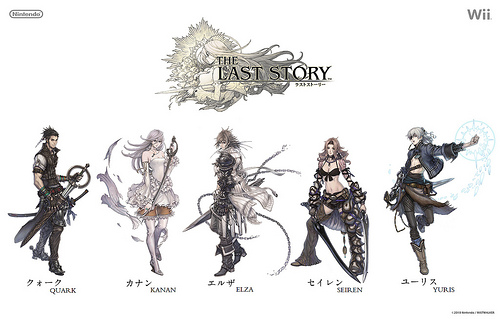
Hironobu Sakaguchi on The Last Story

On Thursday 16th February the legendary Hironobu Sakaguchi, creator of Final Fantasy (a tag which he admits to be "really tired" of, but as videogame introductions go it isn't bad), came to BAFTA to discuss his new Wii JRPG The Last Story, which finally launches in Europe this week (Friday 24th). The conversation encompassed The Last Story's background, battle system and narrative, as well as the evolution of the role-playing genre and the possibility that his first iOS title will be a "surfing game". Here is the RPG titan in his own words. For more Moon Witch Cartridge coverage of Hironobu Sakaguchi, here's our look back at Chrono Trigger.


Hironobu Sakaguchi on The Last Story's belated release...
In Japan The Last Story was released on the 27th January last year (2011). It took some time to localise the game but finally we've been able to come to its release. I will be in Paris for the release and I hope everyone enjoys the game.


On The Last Story's world...
The game is staged at a fortress that protects the empire of the Lazulis Island. It's a story about a group of mercenaries, who dream about becoming knights.


On The Last Story's central city...
By making the main city (the) only one I created the game with greater detail and density. I was also very conscious about including more minute details, such as the protagonist bumping his head against a signpost, and him reacting to that.


On breaking JRPG convention...
Because I wanted to create a completely new battle system for this game, we had a year long experimental phase where we tried out perhaps twice as many systems than those that were in the end adopted. My ultimate goal was to create a game that would be hailed as a new style of RPG, and I hope people will feel the same way.


On real-time versus turn-based battle systems for The Last Story...
For this game I had the idea of Gathering - this is a move that attracts the attention of the enemies to the protagonist, to make (the rest of your party) free. By doing this the player can bring order to a chaotic battlefield, or perhaps conversely, break up an ordered enemy group. Because this concept was at the core of this game, for me a real-time battle system was most important.


On cut-scenes...
One of the systems that I really like about this game is a fast-forwarding function...in many games there's a skipping function, but with the skip people won't be able to follow the story. But with this fast-forwarding function players will be able to follow the story roughly by reading the fast-forwarding subtitles. For me the story is important, so it was important for people who usually skip cut-scenes, to also be able to follow the story.


On differences between The Last Story and his other games...
Gaming is a form of entertainment, so it's more fun for players to have fresh elements that surprise them, so I believe that this new battle system will be enjoyable for all of you. Apart from that, I've created a very detailed city, and incorporated an online function, so I feel that new players will be able to enjoy a game full of various new ideas.


On parallels between The Last Story and Final Fantasy, given the similar titles...
It's not really answering the question directly, but my daughter once told me: "Final Fantasy, Lost Odyssey, The Last Story - how come you can only give such similar names to your games?". So for the next game I'll definitely give it a different name.


On how he gets his ideas...
Often ideas come to me when I'm taking a shower, or waiting for a wave when I'm surfing, and Gathering was one of those ideas that came to me during this. Of course new ideas always need to be experimented, and that was no different for the Gathering system. At first, this Gathering caused enemies to all come to the protagonist at once, so there was a lot of trial and error involved with the game design.


On his inspirations...
In terms of the storyline for my games often what inspires me is, for example, a birth of a child, or a death of a close person. And on the systems side, often what inspires me is, playground games that you play as a child.


On the evolution of the RPG...
I think there are three things. Firstly, the transition from 2D to 3D, for Final Fantasy 7; this was a huge turning point, I believe. Another thing is the increased use of the internet, the incorporation of an online element into a game has also given additional dimensions. And thirdly, with the evolvement of hardware, games have evolved greatly in terms of graphics and sound being much more richer than I knew 25 years ago. We've come a long way since 25 years ago, when I was creating the first Final Fantasy.